Waiting for the Next Big Thing: Northern Michigan oil and gas industry down, but not out
March 2026
It just ain’t like it used to be.
For the second half of the 20th century, oil and gas was a huge industry in northern Michigan, with certain geologic formations attracting the attention of major multinational companies who – along with smaller players – produced millions of barrels.
Now, production levels are a fraction of what they were in those glory days, particularly in the northern half of the state, and exploration activity is down to almost nothing.
Data shows the state hasn’t cracked six million barrels of oil per year in a decade, with many years north of 25 million in the 1970s and 1980s. Recent gas production is averaging less than a third of the boom days of the 1990s. There were just 19 new holes drilled in 2025, down from an average of 600 to 700 per year well into the 1990s.
“The bloom is definitely off the rose when it comes to oil and gas exploration in Michigan,” said Terry Beia, a longtime industry veteran who switched his focus to real estate years ago. “The basin is mature, the growth days in the Michigan patch are well behind us, and the low-lying fruit has been picked.”
With most oil and gas that can be easily extracted long gone, almost all of the big players have left, leaving behind smaller outfits that mostly focus on so-called tertiary or enhanced oil recovery techniques.
But this isn’t an obituary. The industry still employs thousands of people, particularly in supporting roles, and there are some exciting things going on with new technologies. Many landowners continue to receive important revenue from oil and gas leases. And any number of new technologies or discoveries could lead to another boom, particularly if supported by higher oil prices.
“One thing holds true in the history of the Michigan oil and gas patch,” Beia said. “Just when you think it’s over – it isn’t.”
Boom times
You’ll hear oil and gas people repeatedly use the term “play,” which refers to a specific set of oil and gas fields or prospects. Michigan history is marked by booms in activity around the discovery and exploitation of these plays.
Though there were others, one of the biggest was the Niagaran reef play from the 1960s into the 1980s, which produced millions and millions of barrels of oil. And everyone still talks about the Antrim shale, a primarily gas play that dominated the late 1980s and 1990s and produced trillions of cubic feet of gas.
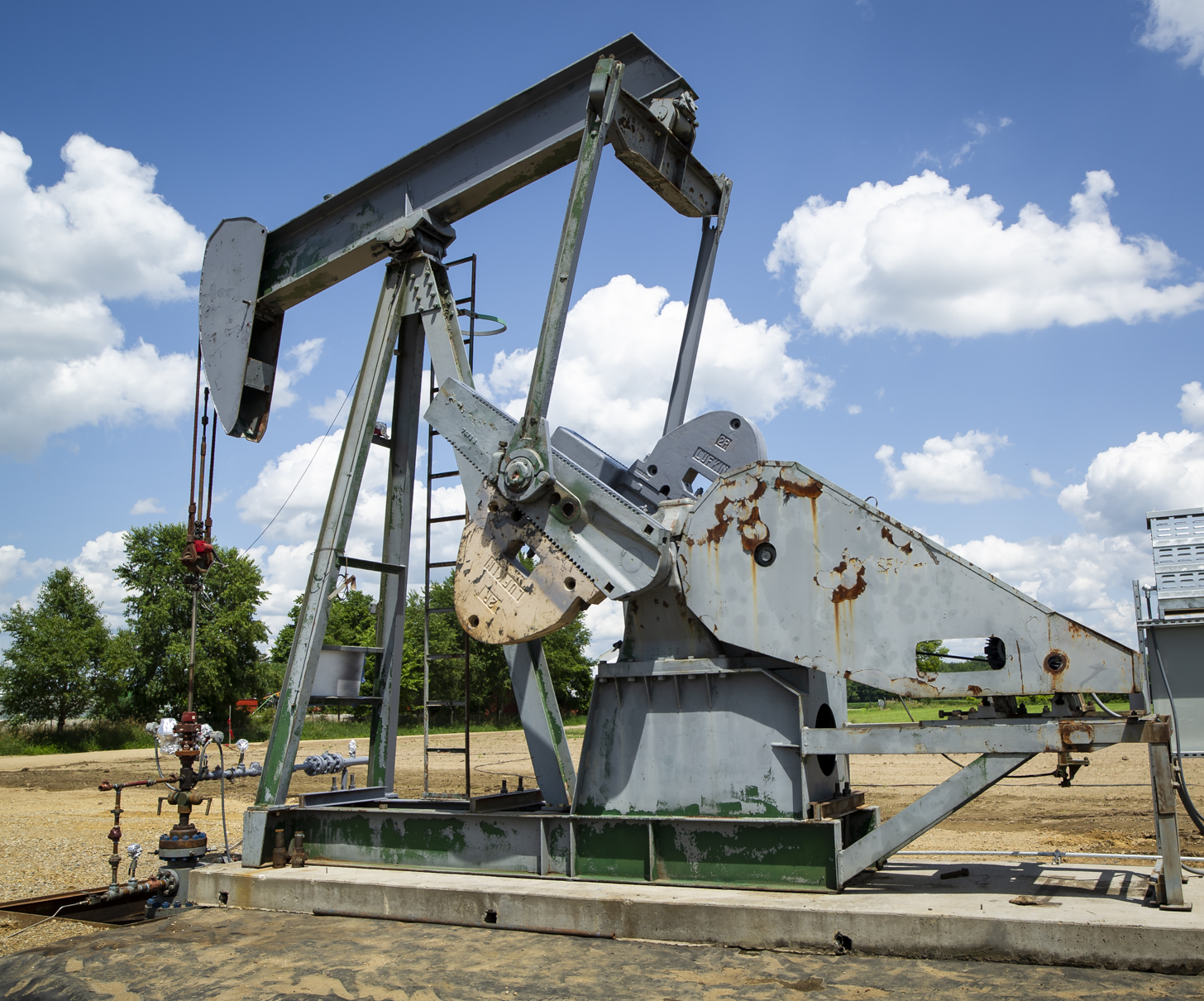
These plays attracted massive attention and generated considerable economic activity. Pat Gibson, COO of Traverse City based West Bay Exploration Company, remembers the frenzy.
“When [West Bay] started in 1981, that was when the Niagaran reef play was really going on. Shell and Amoco were here, and they had offices down Grandview Parkway, and they had a lot of people here at that time,” he said. “It was Shell’s most economic play in the world, and they were putting a lot of resources into it.”
This meant a lot to many people throughout northern Michigan, particularly in high production areas like Kalkaska, Antrim and Otsego counties.
“My wife and I both went to Forest Area High School [in Fife Lake], and I would say that probably 75 percent of people we went to school with, their dads worked in oil and gas,” Gibson said. “And they made good money.”
Save for a few spikes here and there, particularly when oil prices were higher, the major players left over the next several decades as resources were extracted and better opportunities presented themselves elsewhere.
Still going
West Bay Exploration still employs 24 people in Traverse City, but almost all of its Michigan activity is now downstate. That pattern has repeated itself with several companies that were started and are still headquartered in northern Michigan, but that now focus in large part elsewhere.
John Wilson’s Ludington-based Western Land Services works with landowners to acquire leases for a variety of energy projects. The company used to be exclusively in oil and gas in Michigan, but now focuses on oil and gas in other states and renewables everywhere.
“Most of our current Michigan work is on renewables,” he said. “The oil and gas side keeps a couple of people busy, but in the old days it kept 50 people busy.”
But oil and gas is still coming out of the ground here, and the industry supports many people throughout the region.
“Oil and gas still means a terrific amount to this area. It’s not like it used to be, but there’s still a big impact,” said Rod Christopherson of Kalkaska-based Lambda Energy. “It still employs a lot of people in the area, whether it’s trucking, roustabout services, drilling services, maintenance services. It’s not the Shell boom or the Amoco boom
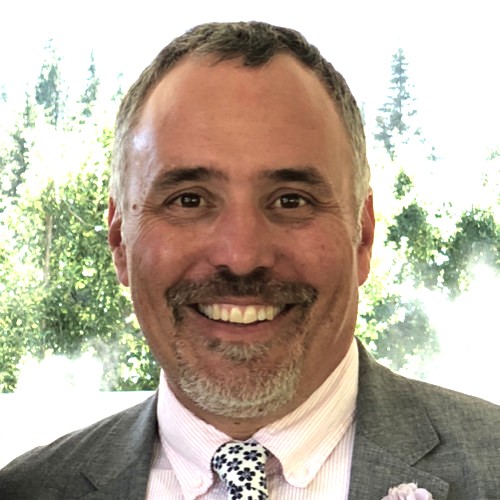 Pat Gibson
of yesteryear, but there’s still a lot going on.”
Among those keeping busy are Kyle Yohe and his team at Yohe Services, a Gaylord-based company that tends to about 750 natural gas wells in the northern half of the state. Their job is to keep these wells functioning throughout the year for a variety of clients.
“We’re just a small blip in the pan, and we’ve got 25 employees,” Yohe said. “There’s still a lot of jobs, and there’s a lot of people that are still dependent both the Antrim and Niagara plays.”
Players like Core Energy in Traverse City and Lamba are also making ground with advanced techniques. Core, run by Bob Mannes, injects carbon dioxide into spent wells to re-pressurize them and extract more oil. This has an added benefit of permanently sequestering that carbon dioxide in the ground once the well is resealed. This is unrelated to the highly contentious practice known as to hydraulic fracturing, or “fracking.”
“As I like to tell people, we’ve been capturing carbon long before it was cool,” Mannes said.
The CO2 used by Core would otherwise go to waste, and the company is in the early stages of other projects to sequester carbon underground without oil recovery.
At Lambda, they’re actually repressuring wells with purchased gas itself, a “spend money to make money” approach that produces new gas or oil at a profit.
“We pull more natural gas liquids and oil out of the reservoir,” Christopherson said. “For every unit of gas we put in, we get more back.”
Challenges are plenty. Oil prices are low, which puts a major damper on exploration and production. Regulations are also higher than in other states. Wilson was surprised, for example, to find it easier to drill in a state known for its environmental ethos.
“We drilled wells in California over the last couple of years, and I'd say our regulations here are as stiff or stiffer than California,” Wilson said. “Not that that's wrong or anything, but it does make the cost of drilling higher.”
A reduced support network has also driven an increase in costs.
“A lot of the tier-two suppliers, the service companies, when they're not staying busy enough, they're going to just close up shop or they're going to pull out of Michigan and stay down in Pennsylvania or Ohio,” Mannes said. “There's certain services we used to get right out of Kalkaska that we’ve got to dispatch out of Ohio now, and that just costs time and money.”
There is also continued and constant pressure to find more oil and gas for those still in the production arena. It is, after all, a finite resource.
“Every day, an oil and gas company is smaller than the previous day, because our value is measured by the oil and gas reserves that we have in the ground,” Mannes said. “And as we produce each day, it's diminishing, so you've got to keep up with the exploration to keep replenishing the reserves.”
A bright future?
Everyone who spoke to the TCBN for this story said that while the northern Michigan oil and gas scene is a shell of what it once was, that doesn’t mean it will be that way forever.
“It's a dying industry right now, and we need a new geological idea that is commercial to revive it,” said Wilson of Western Land Services. “But Michigan has been through this cycle numerous times. They did the Traverse, they did the Dundee, they did the Richfield, then along came the Niagara play, and Michigan became a national phenomenon before that petered out. Then along comes the Antrim.”
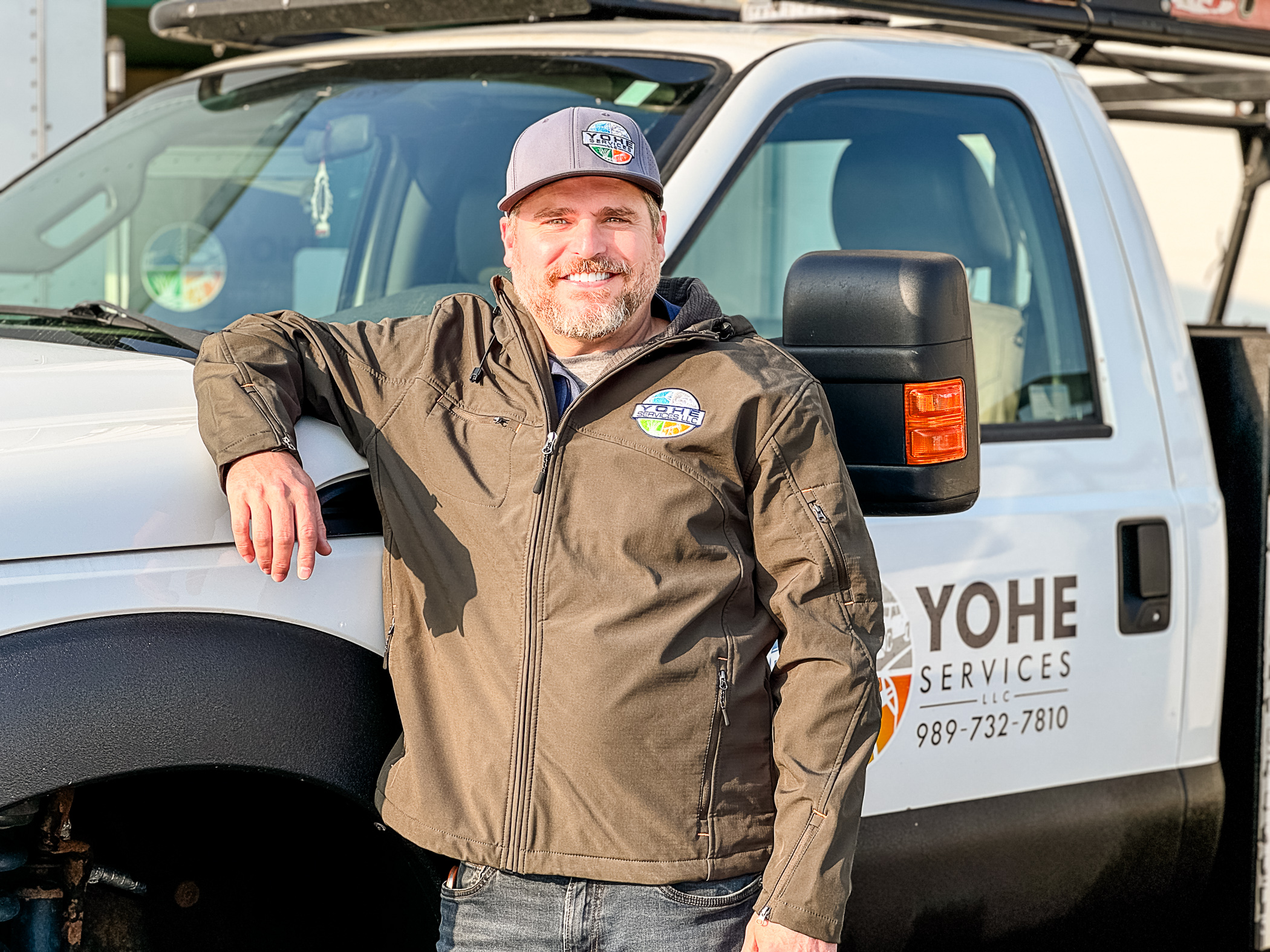 Kyle Yohe /Michigan Oil and Gas Association/Amanda Hattis
Ultimately, with the low hanging fruit extracted, it will take a new process, concept (or discovery of more oil or gas) to set off another boom.
“There are a limited number of geologic formations that will produce oil and gas, and as of this minute, those have been identified and drilled,” West Bay’s Gibson said. “It takes that new idea or a new geologic formation, or a different way drilling for it or exploring for it to bring things back. What changes the environment is when somebody thinks different.”
Wilson pointed to Gibson and his team doing just that in southern Michigan not that long ago.
“West Bay revived the Utica play down in southern Michigan. They developed seismic techniques that allowed them to image these dolomite fractures, and they started drilling wells in a play where historically you hit one out of 15 or out of 20 wells, and they were hitting one out of two,” he said. “So all of a sudden, people started exploring down in southern Michigan again. A lot of wells got drilled and lot of hydrocarbons got recovered.”
The money will always be there ready to fuel another northern Michigan oil and gas boom if the resources – or a new way of getting to them – can be clearly demonstrated, Mannes says.
“We’re not done,” he said. “There’s investment dollars out there, we just need good geologists to come up with good prospects.”
Mannes, who says “there’s always room for optimism” in the industry, points to it being a good time for anyone looking to enter the field.
“The workforce is aging, and there’s a huge opportunity for people that are curious about our business that are ambitious and that have some entrepreneurial spirit,” he said. “I’d say come on in, the water’s fun. These are good paying jobs, and you're making a product that people need.”
Yohe says he remains hopeful for the industry's future.
“I was told my whole life that it'll probably be gone by the time that you're 40, but I’m 42 now, and we're still maintaining a lot of wells, we’re still fixing a lot of things,” Yohe said. “I’m very hopeful that I’ll retire out of this industry like my grandpa did, my dad did, my uncle did.”
Editor’s note: The TCBN thanks Scott Bellinger at Michigan Oil and Gas News for his assistance with historical data, photographs and resources for this story.
Main photo credit: CrackerJack Photography/Jamie Kirschner